
Turnkey Interior Design Explained
Turnkey Interior Design Explained: What to Expect
If you have started researching interior design in Bangalore, you have almost certainly come across the word “turnkey” more than once. It shows up in nearly every interior company’s marketing, but it rarely gets explained clearly, and homeowners are often left assuming it means something slightly different than what it actually does. Given how much this decision affects your budget, timeline, and overall experience, it is worth understanding exactly what turnkey interior design includes before you sign anything.
This guide breaks down what turnkey interior contractors in Bangalore actually handle, how that compares to hiring separately, and what questions to ask before committing to one.
What Turnkey Interior Design Includes
Turnkey, in the simplest sense, means the contractor manages everything from the first design conversation to the day you get the keys back and move in. Nothing is left for you to coordinate separately.
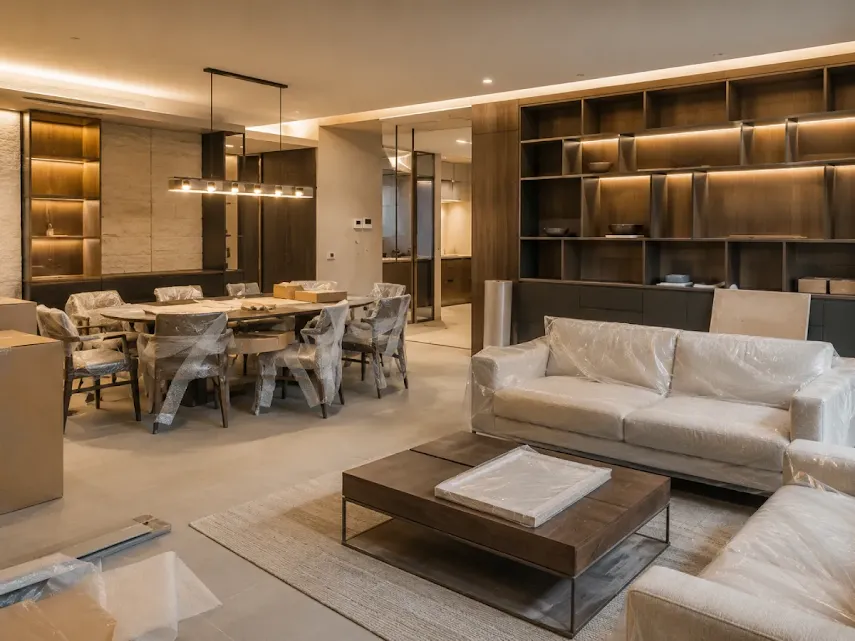
In practice, this covers four broad stages. Design comes first, working through layout, material selection, and 3D visualization until the plan is finalized. Procurement follows, where the contractor sources every material, fixture, and piece of furniture required, rather than leaving you to shop for individual items. Execution is the actual construction and installation phase, civil work if needed, carpentry, electrical, plumbing, painting, and fitting everything into place. Styling is the final stage, where furniture, decor, and finishing touches are arranged so the space is genuinely ready to live in, not just structurally complete.
The defining feature of turnkey interior design is that all four of these stages sit under one contract, with one team responsible for the outcome.
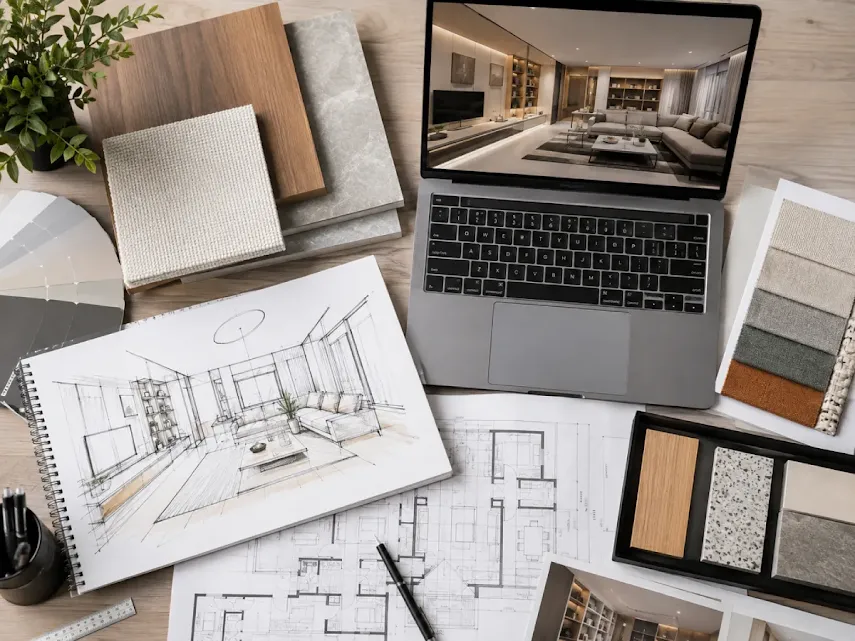
Turnkey vs Hiring Separately
The alternative to turnkey is hiring each part of the process independently, a designer for the concept, a separate contractor for execution, and coordinating material purchases yourself. This approach can work, and some homeowners prefer having direct control over every vendor relationship.
But it comes with real trade offs. When something goes wrong, and in any construction or interior project something eventually does, separate vendors can each point to another party as the source of the delay or the issue. A designer might blame the contractor’s execution quality. A contractor might blame the designer’s specifications. Without one accountable party, resolving these disputes falls back on you, often mid project, when you have the least time and patience to manage it.
Turnkey interior contractors remove this gap. Since one company holds the entire scope, there is no ambiguity about who is responsible when a decision needs to be made or a problem needs fixing.
What to Ask a Turnkey Interior Contractor Before Signing
Not every company that markets itself as turnkey actually delivers the full scope the word implies. Before signing with any turnkey interior contractor in Bangalore, a few questions are worth asking directly.
Ask exactly what is included in the quoted price, and get it in writing. Some contractors label themselves turnkey but exclude furniture, appliances, or certain finishes, leaving those as separate costs discovered later. Ask who handles material procurement and whether you will need to visit vendors yourself at any stage. Ask what happens if the project timeline slips, specifically whether there are penalty clauses or compensation built into the contract, and how design changes mid project are priced and handled. Finally, ask to see examples of previous turnkey projects, ideally ones you can visit or speak to the homeowner about directly, since a portfolio of renders looks very different from a completed, lived in space.
A contractor who answers these clearly and without hesitation is generally a strong signal you are dealing with a genuinely turnkey operation, not just a marketing label.

Benefits of a Single Point of Accountability Model
Beyond simply avoiding the coordination headache, a true single point of accountability model tends to produce better outcomes in a few specific ways. Design and execution stay aligned throughout the project, since the same team responsible for the concept is also responsible for building it, reducing the gap between what was designed and what actually gets delivered.
Budgeting also tends to be more predictable. When procurement sits inside the same contract as execution, there is less room for the kind of scattered, incremental costs that build up when a homeowner is sourcing materials separately across multiple vendors. And because one team is managing the full timeline, scheduling conflicts between different trades, carpentry finishing before electrical work is complete, for example, are far less likely to cause delays.
How Innov8 Groups Delivers Turnkey Interior Projects
Innov8 Groups approaches every interior design project with this same turnkey philosophy as standard practice, not as a premium add on. Our in-house manufacturing facility means procurement and execution happen under direct oversight rather than through third party vendors, which is often where turnkey promises break down in practice for other companies.
From the first design consultation through to final styling, one team stays responsible for the entire project, with transparent, milestone based updates throughout. This is the same accountability model that shapes how we approach construction and interior projects together more broadly, giving clients one point of contact regardless of how many different trades and specialists a project actually involves behind the scenes.
If your project includes new construction alongside interior work, this same philosophy carries over to turnkey construction, where a single team manages everything from foundation to handover.
Conclusion
Turnkey interior design, done properly, means genuinely not having to manage the details yourself, not a vague promise that turns into the same fragmented experience as hiring separately. Understanding exactly what should be included, and asking the right questions before signing, is the best way to make sure the contractor you choose delivers on what the word actually means.
Table of Contents
FAQs
1. What does turnkey mean in interior design?
Textured walls, earthy colours, limewash finishes, colour blocking, and minimalist accent walls are among the top trends.
2. Is turnkey interior design more expensive than hiring separately?
Light shades such as white, cream, beige, light grey, and pastel colours make rooms appear larger and brighter.
3. What should be included in a turnkey interior contract?
Accent walls with textured finishes, neutral colours, geometric patterns, or marble-inspired designs are popular choices.
4. Does turnkey interior design include furniture and appliances?
Matte works well for bedrooms and living rooms, satin is ideal for family spaces, and semi-gloss is recommended for kitchens and bathrooms.
5. How long does a turnkey interior project typically take?
Textured paints generally cost more than standard paints because of the materials and labour involved, but they offer a premium look and long-lasting appeal.
6. Can I make design changes after a turnkey project has started?
Soft shades like sage green, light blue, lavender, warm grey, and beige create a calm and relaxing atmosphere.