
What Is Turnkey Construction
What Is Turnkey Construction? A Complete Guide
If you have been researching home construction options in Bangalore, you have likely come across the term “turnkey” attached to nearly every construction company’s marketing. It gets used often, but it is not always explained clearly, and homeowners frequently sign a contract assuming it covers more, or sometimes less, than it actually does. Understanding exactly what turnkey construction includes before you commit to a builder can save you from a lot of confusion partway through the project.
This guide breaks down what turnkey construction actually means, how it compares to traditional contractor managed construction, and what to look for when choosing a turnkey construction company in Bangalore.
What Turnkey Construction Includes
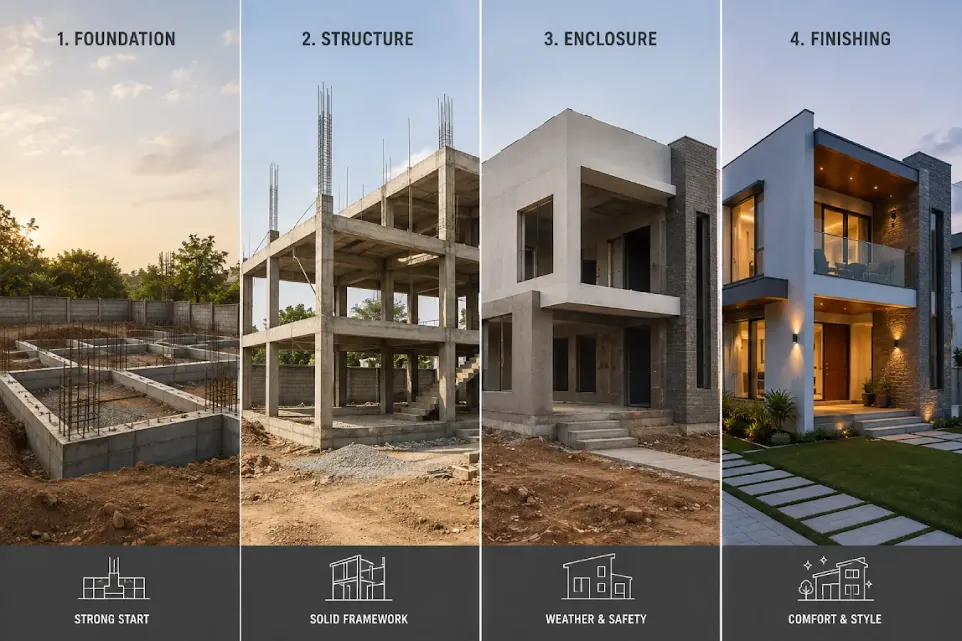
Turnkey construction means a single company manages the entire build, from initial design and structural planning through to the final handover, under one contract. The idea behind the term is straightforward: the client is meant to be able to simply turn the key and walk into a finished home, without having coordinated the individual pieces themselves.
In practice, this covers several distinct stages that would otherwise require separate vendors. Design and architectural planning come first, followed by securing the necessary approvals from local authorities. Civil construction, the foundation, structure, walls, and roofing, follows once approvals are in place. Finishing work, flooring, painting, electrical and plumbing fittings, comes next, and increasingly, interior work is included as part of the same scope, particularly with construction companies that also operate as an interior design team rather than treating it as a separate business.
The defining feature, as with turnkey interior projects, is that all of this sits under one contract with one accountable team, rather than being split across a designer, a civil contractor, and separate finishing vendors.
Turnkey vs Traditional Contractor Managed Construction
Traditional construction typically involves hiring a civil contractor for the structural work, then separately engaging an interior designer, an electrician, a plumber, and various finishing vendors once the structure is complete. Some homeowners prefer this approach because it allows more direct control over each vendor and, in some cases, more room to negotiate individual costs.
The trade off is coordination. When a homeowner is managing multiple vendors directly, delays in one trade often cascade into the next, electrical work cannot finish until civil work is done, painting cannot start until electrical and plumbing fittings are complete, and if any one vendor falls behind schedule, the entire project timeline shifts. Disputes over responsibility are also harder to resolve, since each vendor can reasonably point to another as the source of a delay or a quality issue.
A turnkey construction company in Bangalore removes this coordination burden by holding the entire scope under one roof, with one team responsible for sequencing every trade correctly and one point of contact if something needs to be addressed.
Benefits of a Turnkey Construction Model
Beyond simply reducing coordination headaches, a genuinely turnkey model tends to produce a few concrete benefits. Timelines are generally more predictable, since one team is managing the full sequence of work rather than relying on multiple independently scheduled vendors to stay aligned with each other. Budgeting also tends to be clearer upfront, since a turnkey quote typically covers the full scope in one place, rather than requiring the homeowner to estimate and track costs across several separate contracts.
Quality consistency is another real advantage. When the same company handles structural work and finishing, there is less risk of finishing details being compromised by decisions made earlier in the structural phase without that context being communicated across separate vendors.
What to Look for in a Turnkey Construction Company
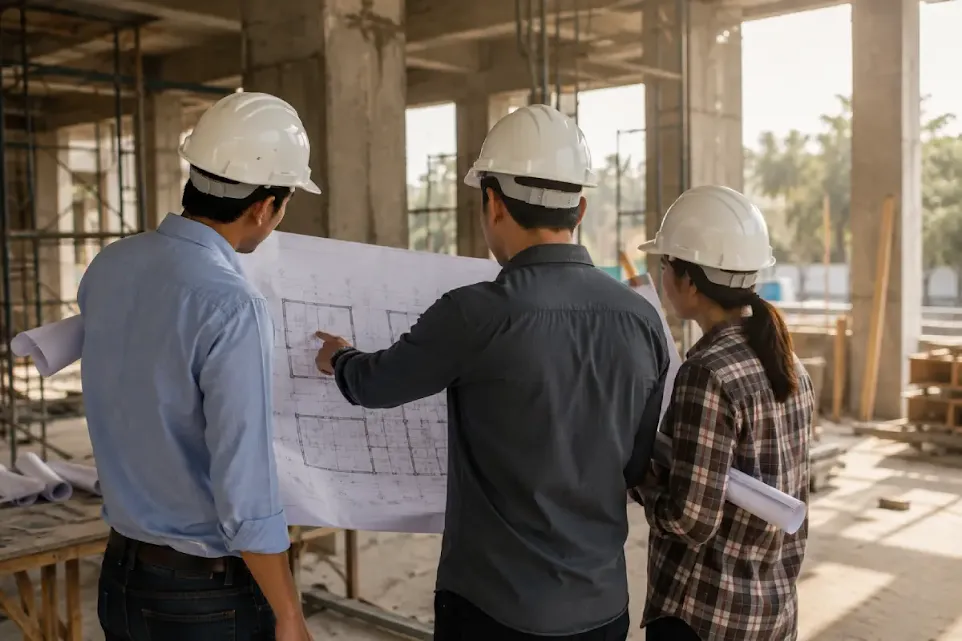
Not every company that markets itself as turnkey delivers the full scope the term implies, so it is worth asking a few direct questions before signing. Confirm exactly what is included in the quoted price, structural work, finishing, and interiors, and get this in writing rather than relying on a verbal description. Ask whether the company has in house teams for each stage of the project or whether some work is subcontracted out, since subcontracted turnkey projects can sometimes reintroduce the same coordination gaps a turnkey model is meant to avoid.
It is also worth asking to see completed projects, ideally ones you can visit in person, and asking directly about how the company handles delays or disputes when they arise, since even well managed projects occasionally run into unexpected issues.
How Innov8 Groups Delivers Turnkey Construction Projects
Innov8 Groups operates as a turnkey construction company in Bangalore, managing design, structural construction, and interiors under one in-house team rather than outsourcing stages to third party vendors. This is the same accountability model that shapes our approach to turnkey interior design, and combining both under one roof means clients working on a new build do not need to coordinate a separate interior contractor once construction is complete.
From the first design conversation through to final handover, one team stays responsible for the entire project, with transparent, milestone based updates throughout, and material and execution quality controlled through our own in house manufacturing facility rather than depending entirely on external suppliers.
Conclusion
Turnkey construction, done properly, means a homeowner genuinely does not need to manage the coordination between designers, contractors, and finishing vendors themselves. Understanding what should be included, and asking the right questions before choosing a turnkey construction company in Bangalore, is the clearest way to make sure the company you choose actually delivers on what the term promises
Table of Contents
FAQs
1. What does turnkey construction mean?
Turnkey construction means a single company manages the entire build, from design and approvals to civil construction and finishing, so the client receives a ready to move in property under one contract.
2. Is turnkey construction more expensive than hiring separate contractors?
Turnkey pricing reflects the coordination and accountability the model provides. Many clients find it reduces the hidden costs of delays and miscommunication that are common with multiple separate contractors.
3. Does turnkey construction include interior design?
This depends on the company. Innov8 Groups’ turnkey model includes both construction and interior design under one roof, which is not standard across all construction companies.
4. How do I choose a reliable turnkey construction company in Bangalore?
Confirm exactly what is included in the quoted price, ask whether work is handled in-house or subcontracted, and ask to see completed projects you can visit in person before signing.
5. How long does a turnkey construction project take?
Timelines depend on the size of the home, the scope of work, and whether the project includes interiors as well as structural construction.
6. Can turnkey construction include renovation work, not just new builds?
In many cases yes, though the scope needs to be discussed directly with the contractor, since renovation projects often involve different planning and approval considerations than new construction.