
Villa vs Independent House Construction
Villa vs Independent House Construction: Key Differences
Two of the most common residential construction paths in Bangalore end up being confused with each other more often than you would expect. Villas and independent houses are both standalone properties, both offer more design freedom than an apartment, and both get referred to loosely as “individual homes” in everyday conversation. But they differ in ways that genuinely affect cost, approvals, design flexibility, and even how the finished home ends up feeling to live in.
If you are planning a residential construction project in Bangalore and trying to decide between a villa and an independent house, understanding these differences early makes the entire planning process considerably easier.
What Defines a Villa Construction Project
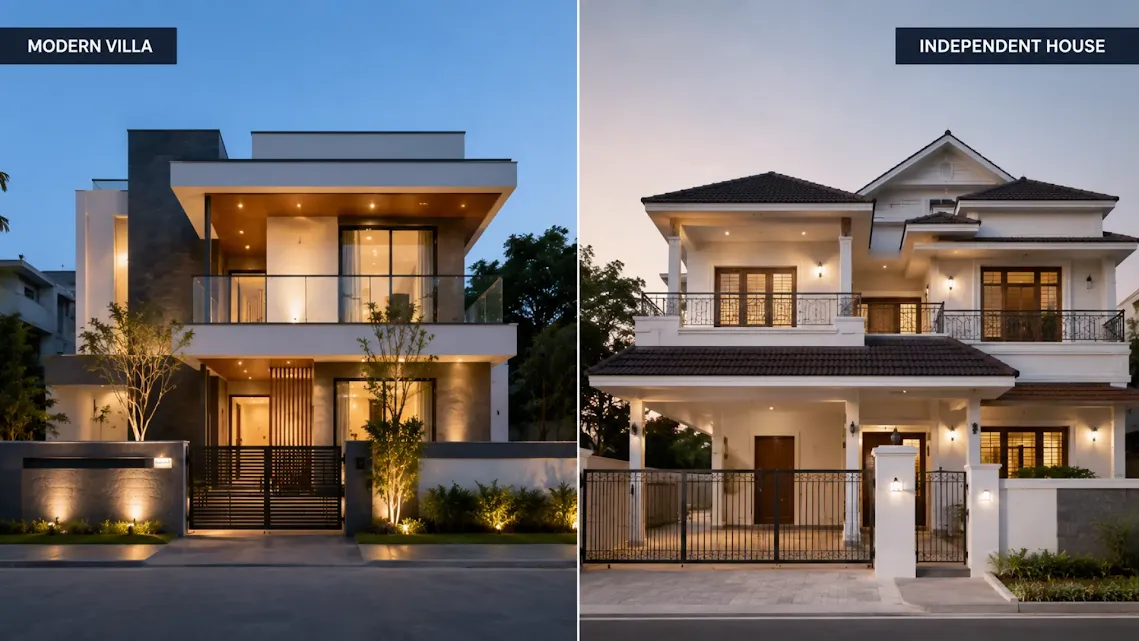
A villa typically sits within a larger, often gated or planned residential development, where multiple similar homes share common infrastructure, roads, security, sometimes amenities like a clubhouse or landscaped common areas. The plot itself is usually part of a layout designed by the developer, with architectural guidelines that keep a consistent look and feel across the community.
This context shapes the construction project in a few practical ways. Plot sizes in villa developments tend to be generously planned, often with landscaping, boundary walls, and outdoor living spaces built into the layout from the start. Because the surrounding infrastructure, roads, drainage, utility connections, is already established by the developer, villa construction can sometimes move faster on the civil groundwork stage, since much of that planning has already been done at the layout level rather than needing to be arranged individually.
What Defines an Independent House Construction Project
An independent house, by contrast, is built on an individually owned plot, purchased separately rather than as part of a developer-led layout. This changes the construction process meaningfully. Every aspect of planning, from setback distances and floor area ratio calculations to utility connections and drainage, needs to be worked out specifically for that plot, in line with local municipal regulations.
This individual context is also where independent house construction offers real advantages. Without a developer’s architectural guidelines to follow, homeowners generally have significantly more freedom over the design, layout, and exterior appearance of the home. Independent house construction in Bangalore is a common path for families who already own a plot, often through inheritance or an earlier purchase, and are building their first home from the ground up.
Ownership and Approval Differences
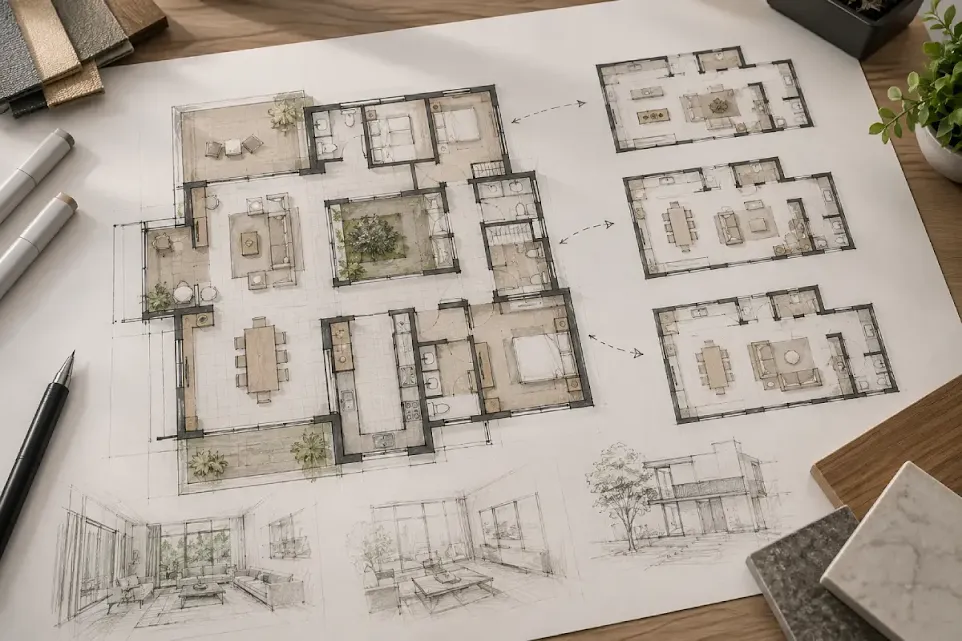
The ownership context between a villa and an independent house creates real differences in how approvals and construction actually proceed. Villas within gated communities usually follow architectural guidelines set by the developer, meaning some design decisions, exterior finishes, roofline, sometimes even elevation, are constrained by what the layout permits. Approvals at the individual home level are often more streamlined here, since the overall development has already gone through its own layout approval process with local authorities.
Independent house construction requires securing approvals directly, typically involving BBMP or BDA depending on the specific location, covering the building plan, setback compliance, and various municipal requirements from scratch for that individual plot. This gives homeowners more control over the process but also means more direct responsibility for navigating approvals correctly and on schedule.
Cost and Design Flexibility Comparison
Cost differences between the two paths depend heavily on the specific plot, location, and scope of the project, so broad generalizations should be treated carefully. That said, a few patterns tend to hold. Villas within established gated developments often come with a baseline cost tied to the plot and layout itself, with construction costs on top reflecting the guidelines and standards set by the community. Independent house construction costs are more directly tied to the specific choices made for that individual project, since there is no shared layout cost to factor in, though this also means more of the planning and coordination responsibility sits with the homeowner directly.
Design flexibility tends to favour independent house construction, simply because there are fewer external constraints on layout and appearance. Villa construction can still offer meaningful design flexibility within the interior and within whatever guidelines the development permits, but exterior and structural decisions are generally more limited than they would be on an individually owned, unrestricted plot.
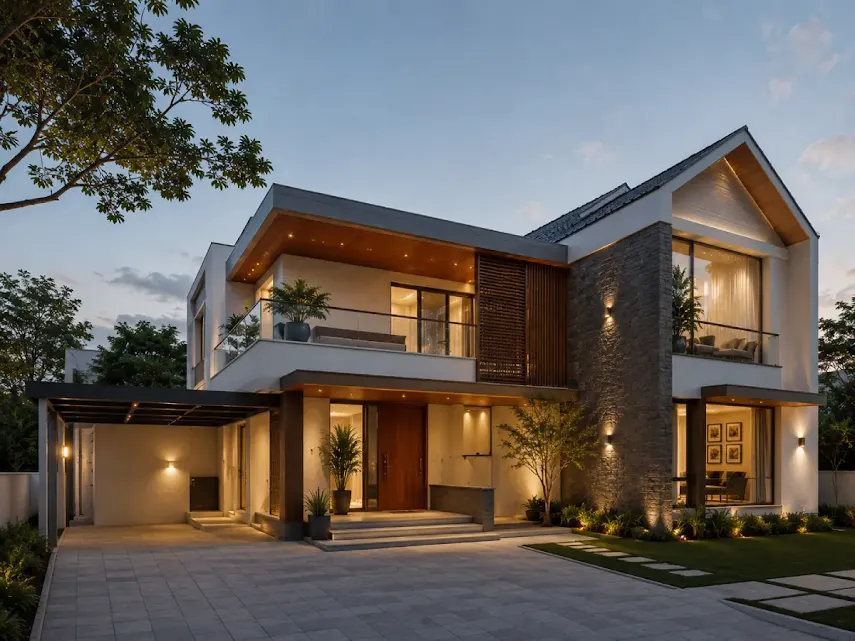
Design style is a separate consideration from either of these paths. Modern home construction, open floor plans, large glass facades, a restrained material palette, is an aesthetic approach that applies equally well to either a villa or an independent house, and should not be confused with the ownership and structural differences discussed here.
Which One Is Right for You
If you already own a plot, independent house construction is generally the natural path forward, and it offers the most control over design and layout decisions throughout the project. If you are looking to buy into an established community with shared infrastructure and a more streamlined approvals process, a villa development is often the more straightforward route, particularly for families who value the amenities and consistency that a planned layout provides.
Neither option is inherently better. The right choice depends on whether you already have land, how much design control matters to you, and how much you value the infrastructure and community context that a villa development provides over the flexibility of building independently.
Professional designers don’t just recommend colours—they create a cohesive design that complements your furniture, lighting, flooring, and lifestyle.
At Innov8 Group, we help homeowners create beautiful interiors through thoughtful colour selection, premium materials, and end-to-end execution. From concept to completion, our team ensures every wall contributes to a stylish, functional, and timeless living space.
Conclusion
Villa and independent house construction both lead to a standalone home, but the path to get there, the approvals involved, the design freedom available, and the overall project experience, differ in real, practical ways. Understanding these differences before committing to a plot or a layout helps set realistic expectations for cost, timeline, and how much control you will have over the final result. Whichever path fits your situation, working with a construction company experienced in both villa and independent house projects means the specific requirements of your chosen path are handled correctly from the very first planning conversation.
Table of Contents
FAQs
1. Is villa construction more expensive than independent house construction?
Villas often involve larger plots, landscaping, and higher specification finishes tied to the development’s standards, which typically increases cost relative to a standalone independent house. The exact difference depends heavily on the specific plot, layout, and scope involved.
2. Do independent houses have more design flexibility than villas?
Often yes. Villas in gated communities may follow builder set architectural guidelines, while independent house plots generally allow more design freedom, within municipal regulations.
3. Can a modern design approach be applied to both villas and independent houses?
Yes. Modern design is a style choice, open floor plans, large glass facades, minimal ornamentation, that applies equally to either property type, not tied to one or the other.
4. Which approvals are needed for independent house construction in Bangalore?
This typically involves BBMP or BDA approval depending on the specific location, covering the building plan, setback compliance, and various municipal requirements for that individual plot.
5. Do villa developments have restrictions on what I can build?
Usually yes. Most gated villa developments have architectural guidelines set by the developer, which can affect decisions like exterior finishes, roofline, and sometimes elevation, though interior design typically remains flexible.
6. How long does villa construction take compared to independent house construction?
Timelines depend on the size and complexity of the project, though villa construction can sometimes move faster on early civil groundwork since layout level infrastructure is often already established by the developer.