
Hotel and Resort Interior Design
Hotel and Resort Interior Design: Creating Guest Experiences
A guest forms an opinion about a hotel within the first thirty seconds of walking in. Before they’ve even reached the reception desk, the lighting, the materials underfoot, the scent in the air, and the general feel of the space have already shaped how they expect the rest of their stay to go. This is why hotel and resort interior design gets judged differently than almost any other kind of commercial interior. It isn’t just about looking good in photographs. It has to actively shape an experience, for hundreds of different guests, night after night, for years.
For hotels and resorts in Bangalore planning a new build, a renovation, or a rebrand, understanding what actually drives guest experience through design helps set the right priorities before the project even starts. This guide covers the areas that matter most.
Lobby and First Impression Design
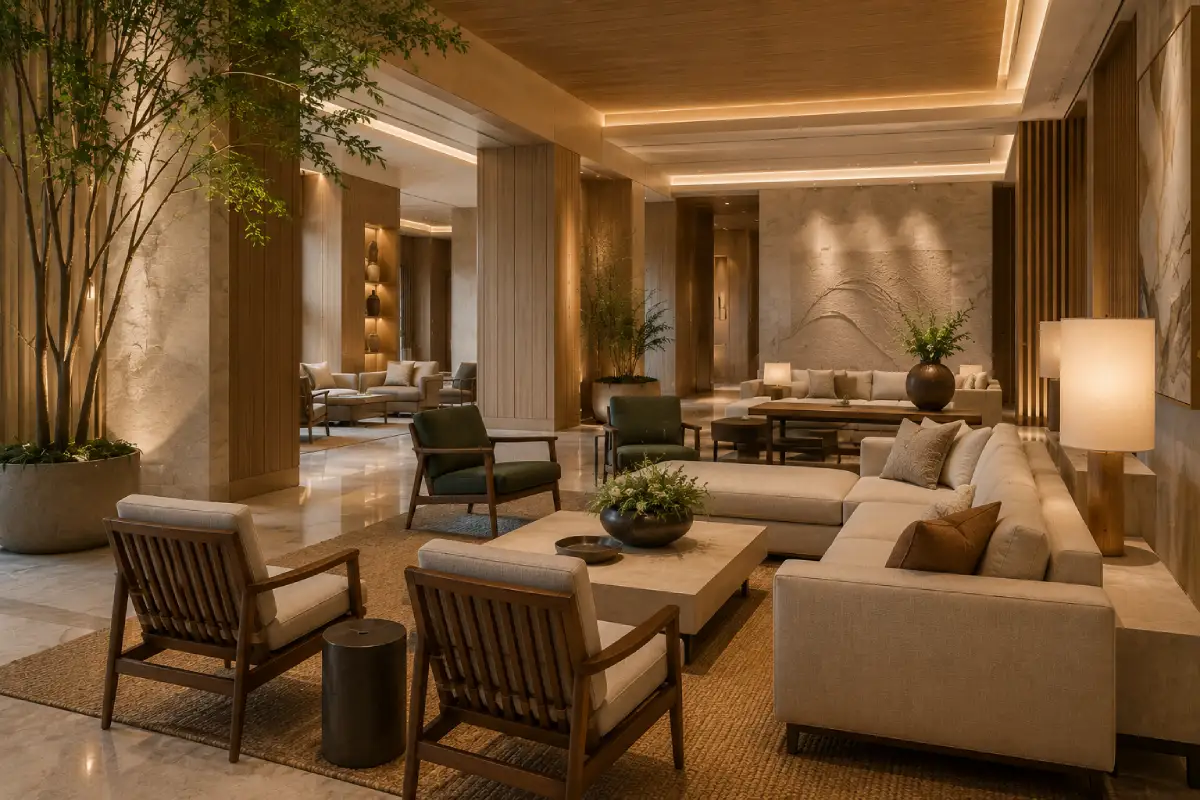
The lobby carries more design weight than almost any other space in a hotel. It sets the tone for the entire property and often becomes the single most photographed and shared space guests interact with.
Good lobby design balances scale with warmth. A grand, high ceilinged space can easily feel cold and impersonal without the right lighting and material choices to soften it. Layered lighting, from statement fixtures overhead to warmer ambient lighting at seating level, does a lot of this work. Material choices matter too, with natural stone, wood, and textured fabrics used to add depth and a sense of quality that guests notice even if they can’t name exactly why the space feels premium.
Seating areas within the lobby also need to serve more than one purpose, working as a waiting area for check in, a casual meeting spot, and sometimes an informal lounge, all within the same footprint.
Guest Room Design for Comfort and Functionality
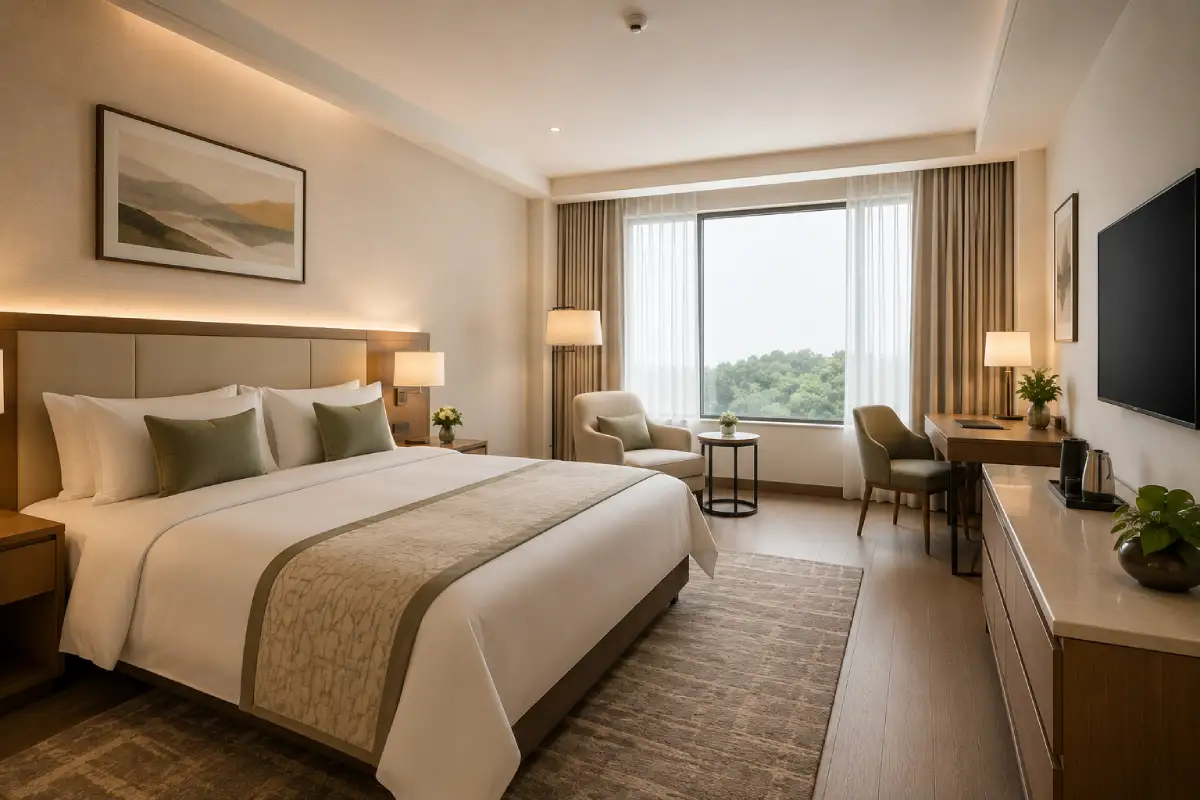
If the lobby creates the first impression, the guest room is where that impression either holds up or falls apart. A guest room needs to feel comfortable and considered while also functioning efficiently for daily housekeeping and long term durability across hundreds of stays.
Layout matters more than most guests consciously notice. Clear pathways around the bed, adequate luggage space, well placed power outlets near the desk and bedside, and lighting that works for both relaxation and practical tasks like reading or working all contribute to how comfortable a room feels to actually live in for a night or several. Bathroom design has become a bigger focus in recent years too, with walk-in showers, quality fittings, and good lighting increasingly expected even in mid range properties.
Consistency across rooms is its own design challenge. Every guest room needs to deliver the same quality experience, which means material and furniture choices have to hold up to repeated use without an obvious difference in wear between a newly renovated wing and an older one.
Resort Specific Design
If the lobby creates the first impression, the guest room is where that impression either holds up or falls apart. A guest room needs to feel comfortable and considered while also functioning efficiently for daily housekeeping and long term durability across hundreds of stays.
Layout matters more than most guests consciously notice. Clear pathways around the bed, adequate luggage space, well placed power outlets near the desk and bedside, and lighting that works for both relaxation and practical tasks like reading or working all contribute to how comfortable a room feels to actually live in for a night or several. Bathroom design has become a bigger focus in recent years too, with walk-in showers, quality fittings, and good lighting increasingly expected even in mid range properties.
Consistency across rooms is its own design challenge. Every guest room needs to deliver the same quality experience, which means material and furniture choices have to hold up to repeated use without an obvious difference in wear between a newly renovated wing and an older one.
Materials and Durability for High Traffic Hospitality Use
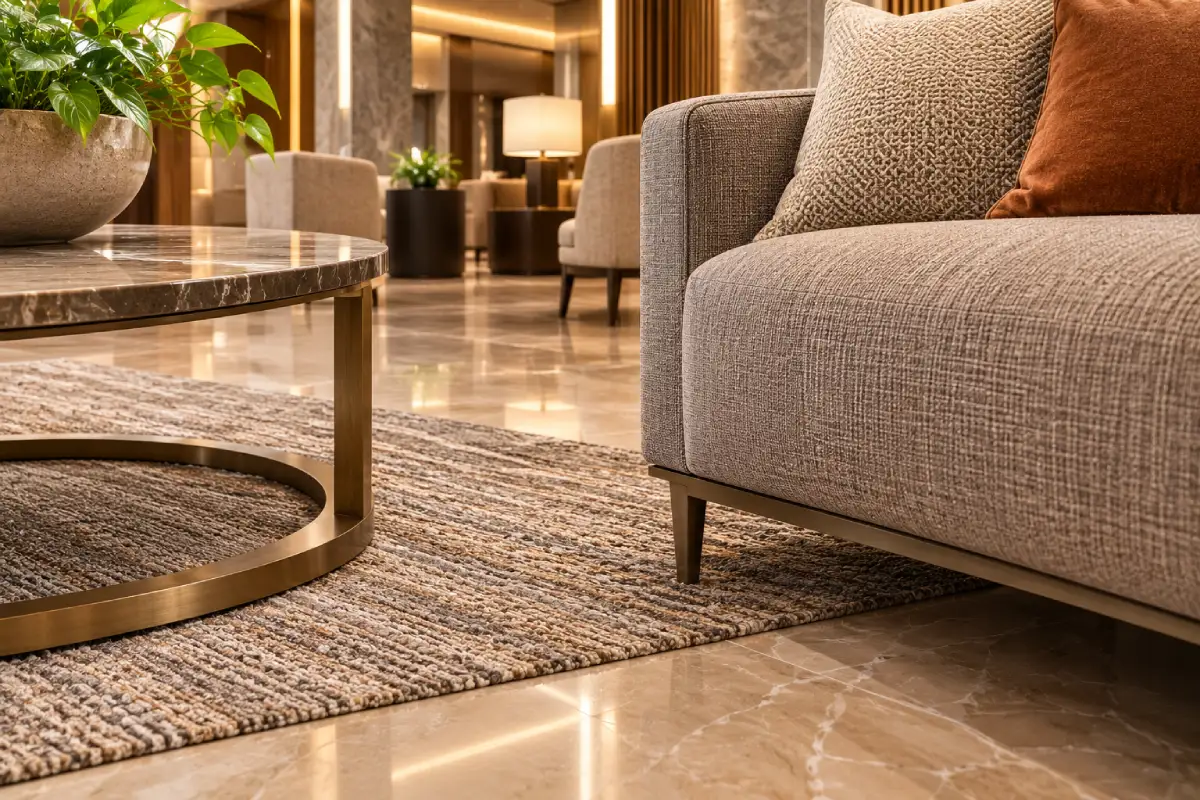
Hospitality interiors take a level of daily wear that few other commercial spaces experience. Lobbies see constant foot traffic, guest rooms get used and cleaned every single day, and public areas like restaurants and bars deal with spills, heat, and heavy use on a nightly basis.
This makes material selection a genuinely technical decision, not just an aesthetic one. Flooring needs to withstand repeated cleaning without losing its finish, upholstery fabrics need to resist staining while still feeling comfortable, and high touch surfaces like door handles and light switches need to hold up cosmetically over years of use. Getting this wrong doesn’t just create a maintenance headache, it visibly ages a property faster than it should, which affects guest perception even when the underlying design is still strong.
Why Hotels and Resorts Choose Experienced Hospitality Interior Designers
Hospitality projects come with a unique mix of requirements that don’t apply to most other commercial interiors, including operational efficiency for housekeeping and staff, strict durability standards, brand consistency across every room and public space, and a guest experience that needs to feel effortless even though a great deal of planning sits behind it.
Innov8 Groups has delivered premium commercial interiors for clients across the hospitality sector, working as hotel interior designers and resort interior designers on projects that need to hold up to daily guest use without losing the quality feel that makes a property memorable. That combination of design sensibility and practical, durability focused execution is difficult to get right without direct experience delivering hospitality projects before.
Conclusion
Hotel and resort interior design is ultimately about shaping how a guest feels, from the moment they walk into the lobby to the last night they spend in their room. Getting it right means balancing first impression design with everyday durability, and treating guest comfort as seriously as visual impact. Whether the project is a new hotel build, a resort renovation, or a phased upgrade of guest rooms and public spaces, these are the priorities worth building the design brief around.
Table of Contents
FAQs
1. What makes hotel interior design different from residential design?
Hotel interiors need to balance guest comfort with high durability, consistent branding across many rooms, and design that supports operational efficiency for staff.
2. How is resort interior design different from hotel interior design?
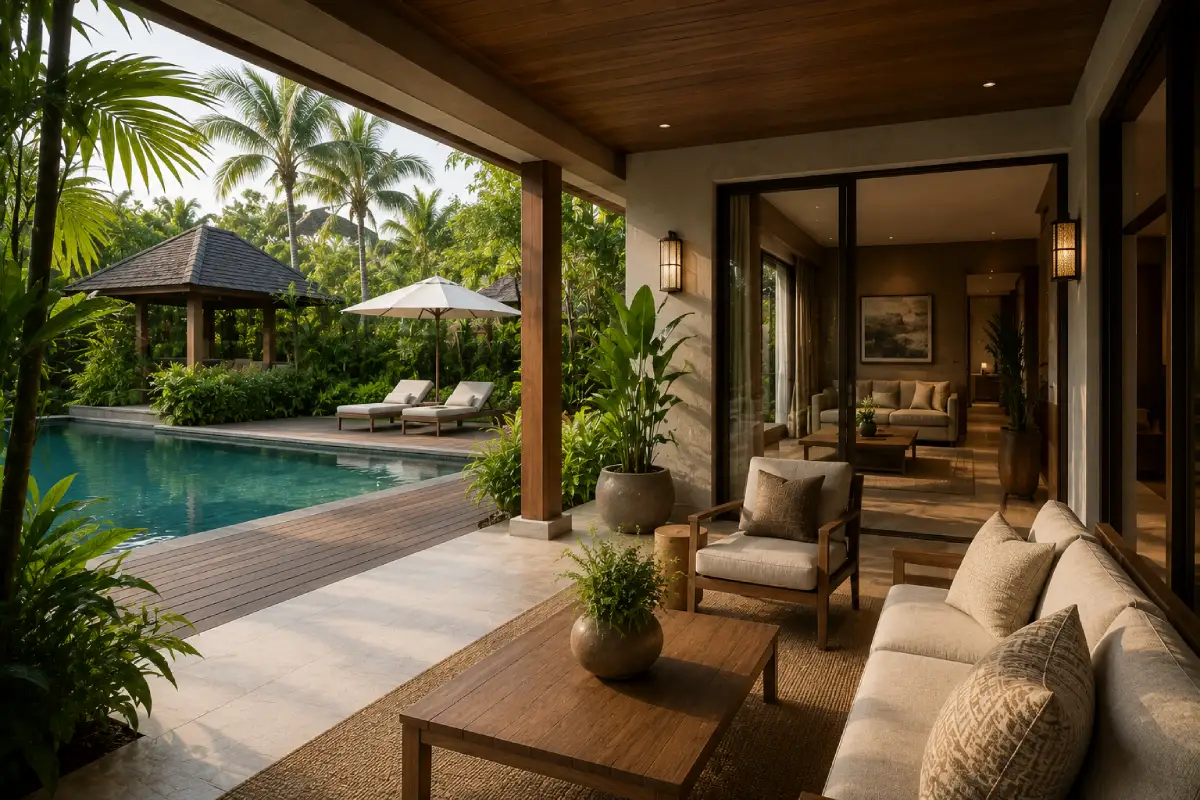
Resorts typically integrate more outdoor and leisure focused spaces, with design that connects indoor comfort to the surrounding landscape, compared to a typically more compact urban hotel.
3. Does Innov8 Groups have experience with hospitality clients?
Yes. Innov8 Groups has delivered premium commercial interiors for clients across the hospitality sector, alongside banking and IT.
4. What is the typical timeline for a hotel interior design project?
Timelines depend on the number of rooms, whether the project is a new build or a renovation, and how much of the property remains operational during construction.
5. How important is durability in hospitality interior materials?
Very important. Hotel and resort spaces see daily, heavy use across guest rooms and public areas, so materials need to hold up cosmetically and functionally over years of constant cleaning and traffic.
6. Do guest rooms need a different design approach than public areas like lobbies?
Yes. Guest rooms prioritize comfort, functionality, and consistency across every room, while public areas like lobbies are designed more around first impressions and brand identity.